Tuesday, 25 November 2014

Rope Analysis- Media


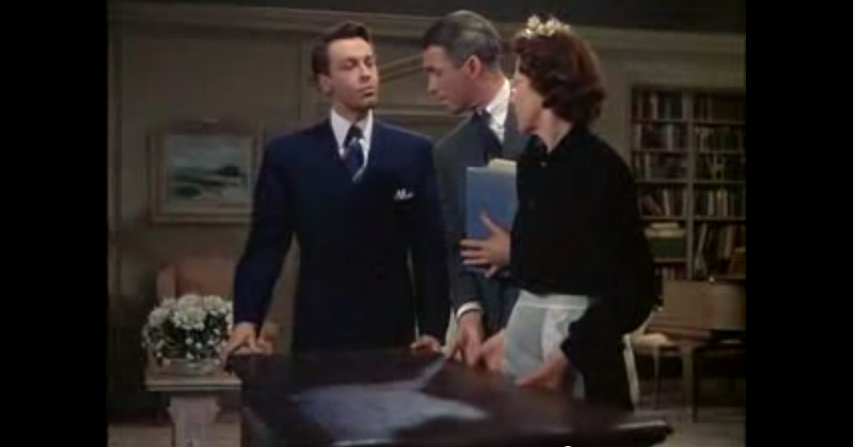
In Alfred Hitchcock's 1948 thriller 'Rope',  Hitchcock steers away from the typical thriller conventions. This is shown, for example, in the fact that rather than containing high energy action scenes, 'Rope' contains more tension building scenes, and so the audience is not filled with adrenaline from fast pacing, but rather filled with adrenaline from not wanting our "Heroes" to be found out and the sheer levels of dramatic irony. This is seen especially in the scene where Mrs. Atwater is about to open the drawer that the body is hidden in, and is a second away from blowing their cover and revealing their "Perfect Murder".
As well as this the audience is also consulted with personal conflict. This is because in usual Thriller, the characters that have the most screen time are the heroes, and our exposure to them make us recognise them as a good person.  Therefore, in "Rope", the viewer is most familiar with the two posh boys, and while technically they're the heroes of the movie, they are villains in their acts of killing a person and keeping the corpse so close to their family and girlfriend. Therefore, at the end where the two posh boys and the man are in a room together, we are left to contemplate who the real hero is.
 Secondly, "Rope" is home to many different thriller conventions, such as Levi Strauss' theory of 'Binary Opposites'. These are different characters in the film that, through their main traits or roles, are portrayed as completely opposite from each other. For example, there is a portrayal in the difference and opposition of sexuality in the film. in the film, we see two different sexual preferences displayed, one of a homosexual relationship (Brandon and Phillip) and one of a straight relationship (David and Janet).


Monday, 24 November 2014

Media Studies- Studio Idents


An 'Ident' is a logo for a film production studio that represents the company as a whole, and since the ident is only shown for a few seconds at the beginning, or rarely at the end, the ident needs to be made as grand as possible, in order to give a much more powerful and successful than their opposition. This is seen in Universal's ident, where it shows the word 'Universal' spinning around the rotating Earth. This would give the impression of the company being bigger and more powerful than the Earth.

 All film studios have studio idents in order to make themselves stand out and to be easily identified. These have varying design and can either be stationary or in motion. Film studios such as 'Metro Goldwyn Meyer' are very well known, and their Ident follows in their recognisability. Their ident features a lion roaring, and due to their success and their well known logo, they have made it to be one of the most recognisable companies and logo in the country, possibly even the world.
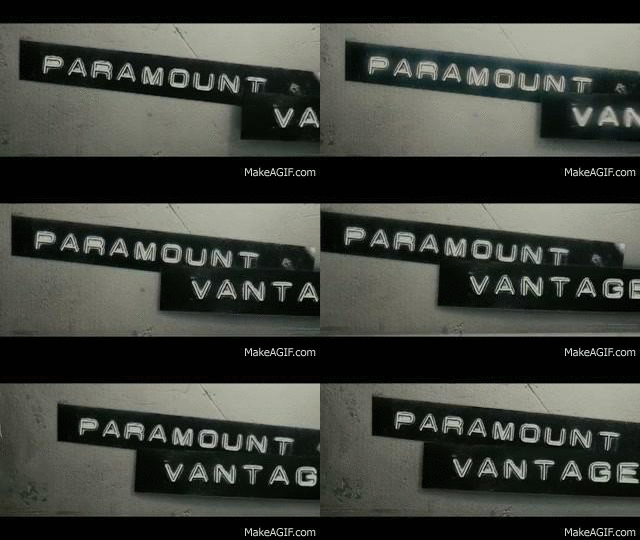
 Despite the concept of showing how powerful and successful the Studio is through the ident, some lower budget indie studios such as 'Paramount Vantage' decide to scrap the idea and go for an ident that, rather than looking powerful and grand, they go for a more simple and yet just as effective by going for a more realistic ident.

 This goes for the British indie studio "Working Title" as well. their Ident portrays a more simple image for them, especially when compared with the big studios such as 'Warner Brothers' or 'Paramount'. Their Ident's symbolise the power and the wealth of their Studio, but Working Title show their low budget and their low place in the Film Studio Hierarchy. This contrasts with the films that they have produced, including "Les Miserables" and "Ali G In da house". However, their lacking Idents make them less memorable than film companies such as 'Warner Bros', and so the film companies themselves are lacking in popularity. This proves that, after all, Image is everything.


Tuesday, 11 November 2014

Media Studies- 'The Birds' Analysis


In Alfred Hitchcock's Thriller film, 'The Birds', starring Rod Taylor, Jessica Tandy, Suzanne Pleshete and Tippi, there are many Thriller Conventions that are used in order to make it a successful thriller. One way that this is achieved is through creating a new type of villain, which is nature itself. Compared to Hitchcocks other Thrillers, including 'Psycho' and 'North by North-West', the main villains have been people, whether it was an evil organisation trying to take down a secret agent, or a psychotic man who really loved his mother, people have always been the cause for the story progressing. However, in 'The Birds' the villains are birds themselves, and Nature is seen as the evil force. This creates a contrast, and enforces a parallel between the normal Thriller and the abnormality that this movie creates. This follows Vladimir Propp's theory about the different character types in all thrillers. In 'The Birds', there is a villain(The Birds), there is a Helper(Worker from school), there is a Provider(Mother), there is a princess and there is a father. Therefore, this Thriller does follow Propp's Theory of Binary Opposites, and does follow certain Thriller Conventions. There are other themes that are used in 'The Birds' that are used to keep the audience's attention to the film, such as 'Dramatic Irony'. This is where the audience are aware of a plot point or a situation in the film that the main hero doesn't know. This happens in 'The Birds' when the main character is outside of the school, and a flock of killer birds gather behind her without her knowing.

Thursday, 6 November 2014

Mise-en-Scene Media Studies

Mise-en-Scene is a French term used in film making meaning "In the scene", and is used to describe everything on the screen at one time. This includes five elements that are; 'Setting and Props', 'Costume, hair and makeup', 'Facial Expressions', 'Lighting and colour' and 'Positioning of characters and objects in the frame'.
 In terms of colour, movies such as "We need to talk about Kevin" use the objects in shot to represent certain moods and emotions, mostly red in this instance. Red is used in "We need to talk about Kevin" because the film is primarily a thought provoking film, and is a form of 'horror' film based around the fear of being a bad parent. The story is enhanced by the mise-en-scene very well, and the section of 'Lighting and Colour' is manipulated in order to enhance the fear and thought provoking factors. Some parts of the film are shown as dark and plain in terms of the lighting in order to enhance the suggestion of the darkness of the story. As previously stated, red is a common colour in the film, and is used to represent violence and anger within the main woman and Kevin, and is often shown at times of anxiety of danger. Black and White are also common colours in the film, as they are both shown in most scenes. An example of this is during the beginning scene, where the first thing that the audience is greeted with is a POV shot of the woman walking into a white curtain blowing in the darkness of night. This would seem to be a strange opening scene, until realising that the same scene is used near the end of the film, and the other side of the curtain is revealed to cover the woman's husband and child dead by being shot by an arrow on the lawn. This can be interpreted to represent the woman life, and the curtain and the darkness are part of this. The complete darkness can represent the woman's life up to that point, covered in darkness with very few parts actually happy, shown by a small collection of illuminated objects. The white curtain can be seen to represent the safety of her happiness, and that contains her husband and her daughter. Therefore, when she peers through the curtain and sees her dead child and spouse, she is piercing through the last safety net of happiness of at least having people in her life other than Kevin.
 'Settings and Props' is also represented well in the film, as there are a handful of scenes that depict points of her life in a non-linear sequence, and one of these takes place directly after the first curtain scene, and shows the past of the woman. the scene shows her taking part of a Spanish festival known as 'La Tomatina'. The festival mainly consists of a large group of people celebrating in Tomato juice and tomatoes being  thrown at each other. Within this festival is the woman, smiling and being carried by a large group of random me. This can be shown to be the one of the last happy moments in her life, as this entire sequence just ends up being recollection in a dream. Therefore, the setting is used to spread a message to the audience, one of how sad and lonely the woman is in order to only be able to revisit enjoyment and ecstasy is through her dreams.

Tuesday, 14 October 2014

Media blog one- Thriller convenions

 In order for a movie to be classified as a thriller, it has to contain certain aspects and inclusions in the movie that repeats throughout the genre. These can include; Fast pacing throughout the scenes and in editing, frequent action, often between the main character and the evil villain or an evil organisation and resourceful and intelligent heroes that have to thwart and destroy the plan of the evil villain. These characteristics are spread across almost all thrillers, with the exception of one or two. These thrillers also has a plot that is driven by the villain, and so the main protagonist is rather dragged along with the plan in order to defeat them.
 Thrillers also manipulate certain devices in order to make them successful and well driven. These devices can include; suspense to keep the audience on the edge of their seat and glued to the screen in order to see what happens next. Thrillers also uses Red Herrings in order to trick their audience, and to throw them off of their best judgement. Cliff hangers is also used, often at the end of the Thrillers, in order to include dramatic irony n some cases, and to make the audience excited for the next instalment.
 Thrillers in general is quite a flexible genre, and can engage the audience through a dramatic rendering of psychological, social and political tensions. This means that the premise of Thrillers can be adapted and moulded in order to fit a story, which can be based off of different twists in story, including the addition of mental issues, physical limitations and certain tensions that affect the society at the time.
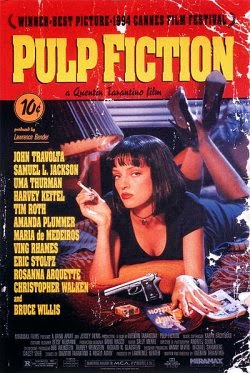
 Thrillers also have a certain reputation to go against other films. Some of the best received and most successful films created in recent years have been Thrillers, and even stretches back to other classic films like Pulp Fiction. This film can be considered the best example of a thriller by the fact that it makes you think and piece the plot together as you watch, keeping the audience members immersed and interested. This tactic can not be seen in other film genres, such as in action or sci-fi, which can often feature a straight forward and linear plot, unlike pulp fiction.

Monday, 13 October 2014

Media sound Possessed


In the task given to us, we had to create a film that utilised sound by using a boom. This exercise was based around having a conversation, but unfortunately the boom didn't record the sound, and so for half of the film there is no diegetic sound. This meant that we had to resort to using added in sounds and music, but we couldn't record a conversation, meaning that we had to improvise and add subtitles. This rather defeated the purpose of the exercise, but since the problem was not our fault we decided to keep our progress. We can obviously improve on this in our later work by using a fully functioning boom microphone, and apart from that there is not much that we can physically do in order to improve next time.

Tuesday, 30 September 2014

Media Assignment- Hitchcock's North by Northwest

North by Northwest:

In Alfred Hitchcock's Thriller 'North by NorthWest', there are many subtle inclusions to the scene that make it iconic, embedded inside of the Cinematography, the Sound, the Mise-En-Scene and the editing.

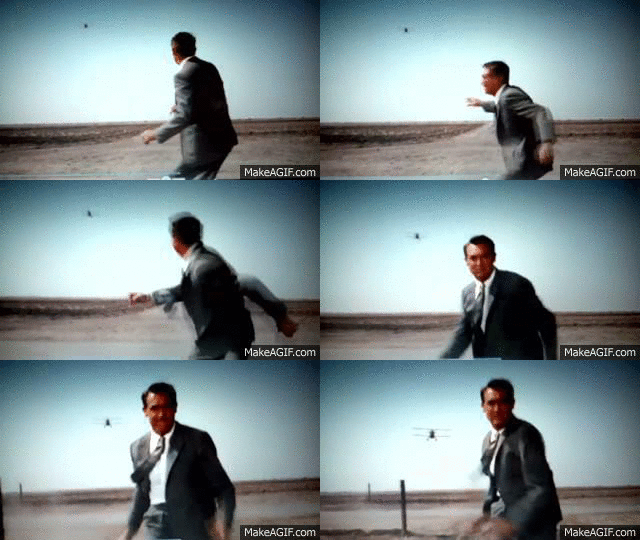
 For example, in Hitchcock's Cinematography work is used in order to beat the cliché of most thrillers. This is present in the opening of the Crop Duster scene, where there are upwards of 8 shots establishing his surroundings and his place in this. These establishing shots give the sense of isolation and desolation in his place, which beats the norm in Thrillers. Also, while the scene unfolds, there are multiple opportunities where Roger could have been killed, such as the slow driving black car. The audience would guess that Roger Thornhill would be shot at that moment, but Hitchcock decided to beat the audience, and the black car drives away without touching him. Another piece of cinematography used in the crop duster scene is a steadycam, where Roger Thornhill is being chased by the crop duster plane, and we follow Roger running while the plane is coming ever closer to him. This shot is iconic, s it is able to show Thornhill's face as he runs, and also give a sense of true danger to the scene, and the idea that the crop duster is a menace.
 Another crucial aspect of the movie that Hitchcock uses to his advantage is by using the Mise en Scene to trick the aidience. This is accomplished through a sequence of shots, whereby the establishing shots show that there is no sanctuary, no haven for Thornhill to hide in when he inevitably gets attacked, by a method that we don't know. All of this is given from the surroundings and settings that we learn that Thornhill is in. Due to this location, there are very few props that come into play, and so shots can be filmed in any random order, but the background will almost never change. We also get a great sense of contrast in the movie, as while the countryside is the chosen placement, Thornhill is wearing a smart, clean and we'll kept suit, which is different to the norm that you would see in the actual countryside. 
Editing is also used to create a sense of actual thrill, which Is the obvious intention of a thriller. This is seen during the beginning of the scene, where Thornhill is walking across the road to speak wit the mysterious man, and all of the sequences are relatively long in length, ranging from about 4 seconds in length to upwards of 9 seconds. This lures the audience into security, and to make the viewer feel slightly more immersed with the movie. This all is changed during the chase scene between Thornhill and the cropduster, where it includes some particularly fast paced an short shots, making sure that the audience doesn't have enough time to focus and to explore certain things on the screen, and for us to simply observe the carnage. This is not applicable to the crop duster scene in particular, as there are still some longer shots kept in. Another aspect of editing is the style of which the different clips were added together. In the entirety of the extract, the cut between clips was filled by a straight cut, where there is no kind of transition between these. However, in some shots, the editing style differs, such as a dissolve bridging the clips of a close up of Thornhill, and a single small growth of corn. This is used to show that he is looking at the corn, as dissolved are often used to tell the audience that the two shots are linked, and in this case, that he is looking at the corn.
The final piece that Hitchcock used in order to make the film, and especially this scene, famous was by using the sound. Throughout the sequence, we an hear diegetic sounds, such as the cropduster flying over and Thornhill grunting. This is also accompanied by non diegetic sounds, such as the fast paced music playing at the same time. Parallel sound is also used, as the music used fits the scene very well, as both are fast paced and action packed. There is a mixture of On-screen and Off-screen sounds being used, where the plane can be seen and heard flying over, but in the same or next shot, the plane can still be heard, but it was transitioned from being On-screen to Off-screen.